July on Hothfield Heathlands: Orchids & bats
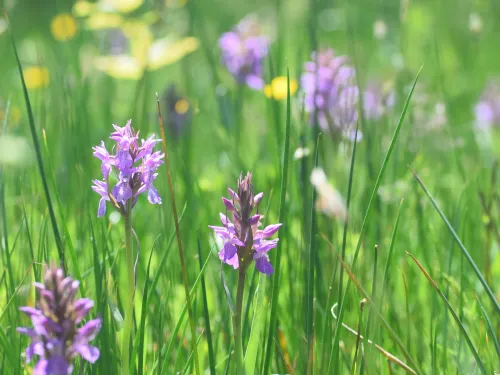
Hothfield's evening bat and amphibian walk revealed pipistrelles, newts, and a nightingale's song, while rare heath spotted and Southern marsh orchids bloom in the reserve's acid bogs.
©David Green
The management of this site by Kent Wildlife Trust has created areas of coarse grass and broken short turf, which encourages a myriad of species to flourish. The habitat preference of Straw Belle for short, warm, herb-rich grassland with a mosaic of bare patches for early stages and tussocks for adult stages has been achieved through light cattle grazing.
Kent Wildlife Trust’s Estates Team has a combined total of 100 years of conservation grazing experience on nature reserves. With the aim to mimic natural grazing processes as far as possible, targeted conservation grazing is used on sites like National Nature Reserves where there is a well-established habitat condition to be maintained.
The management of cattle grazing is essential for these moths and for many other species that thrive at our Lydden Temple Ewell National Nature Reserve. The Straw Belle Moth fills a very similar niche to our wart biter crickets, another rarity that is restricted to a handful of sites in the country.Ian Rickards, Area Manager
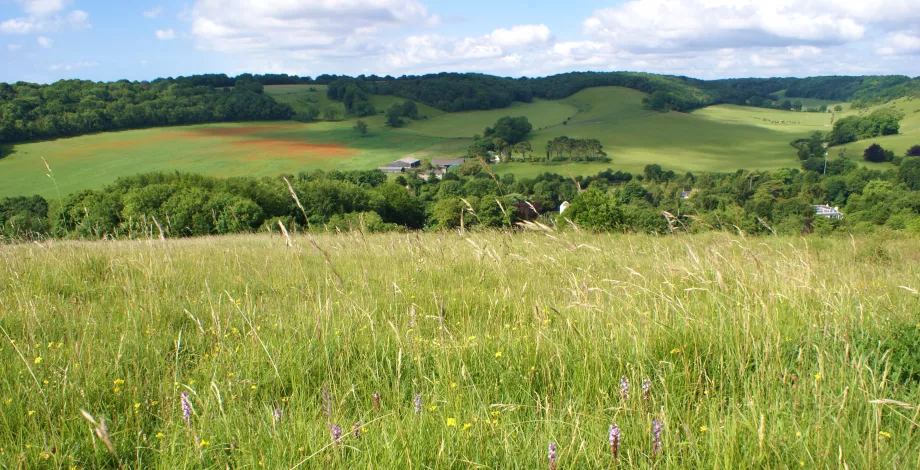
The view from Lydden Temple Ewell reserve, photo by Ray Lewis. Photo by Ray Lewis
Hothfield's evening bat and amphibian walk revealed pipistrelles, newts, and a nightingale's song, while rare heath spotted and Southern marsh orchids bloom in the reserve's acid bogs.
Hothfield Heathlands is abuzz with life in June! In the sky, on the ground, above the water, and under the surface - the reserve is busy, and so are our volunteers.
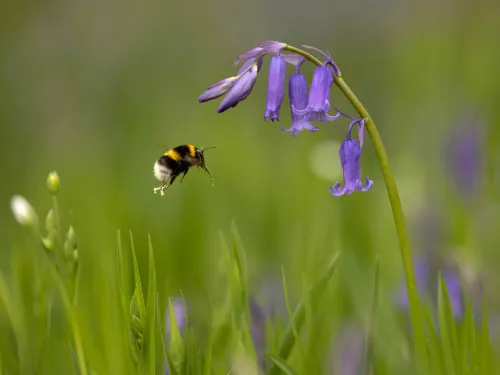
The glossy green spears that pierced dense leaf litter in late winter are now transformed into sheets of violet-purple-blue in the woodland edges of the reserve. The magical bluebell weeks began fairly early, a soft scent and a flood of colour that…