
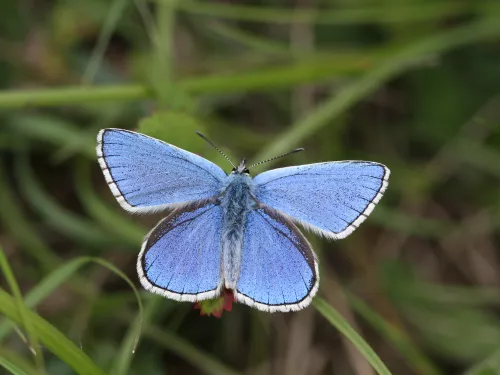
Adonis blue
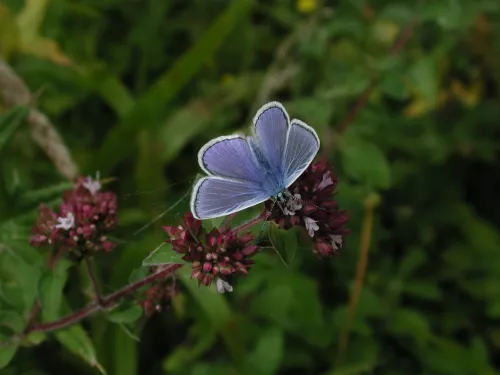
The rare Adonis blue can be spotted on sunny chalk grasslands throughout summer. Males are a dazzling sky-blue in colour, while females are duller brown.

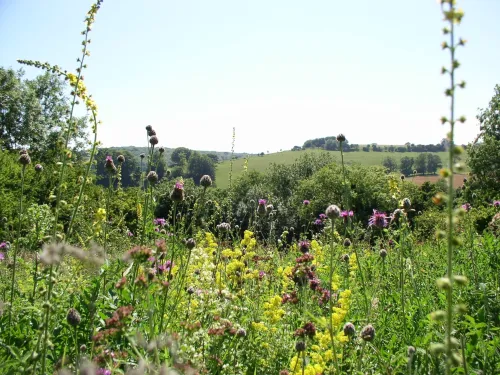
Typical of softly rolling pastoral landscapes, the short, aromatic turf of lowland calcareous grassland is flower-rich and humming with insects in the summer. Its long use by humans lends it an ancient feel and it is often seen amongst prehistoric burial mounds, hill forts and old trackways.
Famous for its floristic richness (there can be over 40 species per square metre of turf) and its rare and beautiful butterflies, this habitat is mostly found on the low chalk or hard limestone hills of southern England and along the wilder coastal cliffs and headlands of limestone country in the west of England and in Wales. However, the largest area of chalk grassland in Europe is found on the flat plateau of Salisbury Plain, while in Breckland the dry, winter-cold continental climate has allowed vegetation similar to that found in eastern Europe to develop. Traditionally sheep grazed, the typically short and open turf, well-drained conditions and sunny climate also make it suitable for invertebrates, and there are hundreds of rare species associated with the habitat. Scrub is typically present and includes lime-loving species such as guelder rose, dogwood and burnet rose, in addition to hawthorn and blackthorn, and occasionally juniper. The scrubby grassland margin tends to be less well-grazed, and supports species not found out on the open grassland, such as common calamint and the great green bush-cricket.
Lowland calcareous grassland is thought to include some of our most ancient grasslands. Woodland clearance, which started during the Mesolithic Period (11,500 BCE – 4000 BCE), may have occurred first in areas where the woodland was sparse, such as on the thin, well-drained soils found over limestone. Subsequent grazing prevented natural succession back to scrub and woodland and, together with the thin soils, discouraged more vigorous, bulky plants. Together with the warm, dry climate, this created conditions suitable for the characteristic flora and fauna we so appreciate today.
The flora is shaped further by the substrate and location. On the cooler, moister southern and western coastal fringes, species such as carline thistle, yellow-wort, black medick, rock-roses and squills are characteristic on the hard limestones. Farther east, as the climate becomes warmer and drier, quaking grass, meadow oat-grass, wild thyme, dropwort, bird’s-foot-trefoil and salad burnet are common on chalk. In Breckland, a particular type of grassland is found where freeze-thaw cycles after the last glaciation sorted the stony substrate, resulted in a pattern of calcareous grassland and heath. Here the calcareous grassland supports a short sward of wiry sheep’s fescue with rosettes of mouse-ear hawkweed and can include several Brecks rarities.
Chalk grassland is only found in north-west Europe, and a significant proportion of this is in the warm and dry southern counties of England, extending up into the Yorkshire Wolds. Limestone grassland is more widely distributed and in the UK is found on the western and southern coastal strips, the Cotswolds and Mendips, and reaching up in the Derbyshire White Peak, Morecambe Bay and eastern County Durham.
Throughout the summer, look for a succession of orchids including early purple, common spotted, pyramidal, fragrant, bee, burnt, greater butterfly, frog and musk orchids and autumn lady’s-tresses. A bit of research helps in finding some of the most special species, including rare orchids, pasque flower, round-headed rampion, early gentian and the Breckland specialities field wormwood, Spanish catchfly, spiked speedwell and maiden pink.
The best places to look for invertebrates are generally on south-facing slopes with a mix of bare ground, short vegetation and longer tussocks, together with plenty of flowering plants. Look for bees, ants, hoverflies, beetles and grasshoppers (including rufous and striped-winged). On sunny days with little wind, clouds of butterflies can still be seen on some of the best sites, including chalkhill, small and Adonis blues. Check also for silver-spotted skipper, Duke of Burgundy, marsh fritillary and Lulworth skipper on sites where these are still known to occur. More common species include dingy skipper, brown argus and, in longer swards, marbled white and meadow brown.
Night-time visits can be rewarding too – look out for glow-worms and for bats feeding on the rich supply of invertebrates.
Lowland calcareous grassland was once widespread in the landscape wherever suitable substrate occurred. However, changes to agriculture meant that the more accessible sites began to be ploughed from around 1700 onwards. Once artificial fertilisers became widely used on arable land, downland was no longer valued (as it was previously used as daytime grazing for sheep, which would then fertilise it with their dung). The rate of loss accelerated rapidly in the second half of the 20th century, and now the only areas remaining tend to be on valley sides or escarpments too steep to plough or re-seed, and those reserved for military use.
On the remaining sites, scrub encroachment is a frequent problem (often dating from the virtual disappearance of rabbit grazing after the introduction of myxomatosis in the 1950s). There has been a decline in characteristic species over recent years and an increase in nutrient levels through air pollution - indeed, the ongoing impacts of past habitat loss are of concern. The habitat is best managed through grazing, and usually requires scrub management. Recently, efforts have been made to increase connectivity between fragmented sites to allow species to respond to climate change.
The rare Adonis blue can be spotted on sunny chalk grasslands throughout summer. Males are a dazzling sky-blue in colour, while females are duller brown.
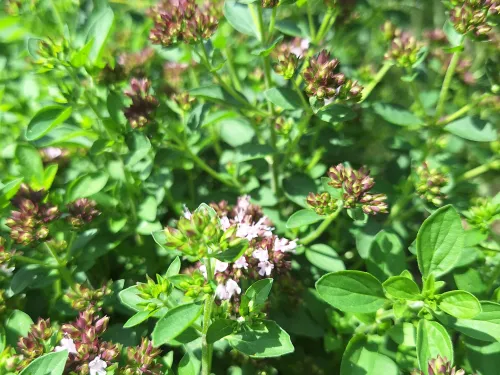
Wild marjoram is actually the same aromatic herb as oregano which is used in Mediterranean cooking. Its small, pink flower clusters can be seen on chalk and limestone grasslands in summer.
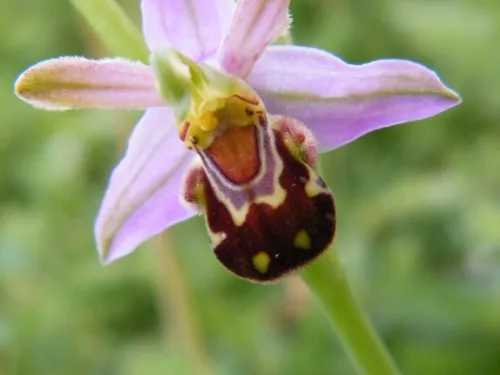
The bee orchid is a sneaky mimic - the flower’s velvety lip looks like a female bee. Males fly in to try to mate with it and end up pollinating the flower. Sadly, the right bee species doesn’t live here, so this orchid is self-pollinated in the UK.
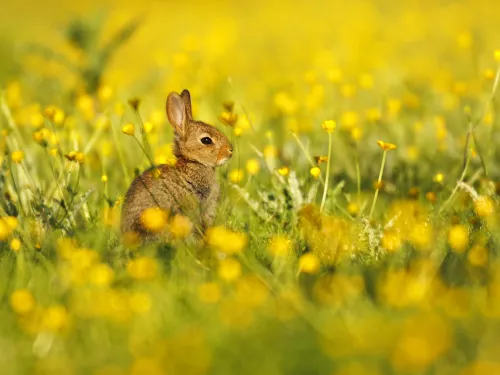
Who doesn’t love spotting rabbits hopping through long grass during a walk in the countryside? They are a common sight but it is always a treat to see their curious faces popping up, ears stood tall on the look out for predators.
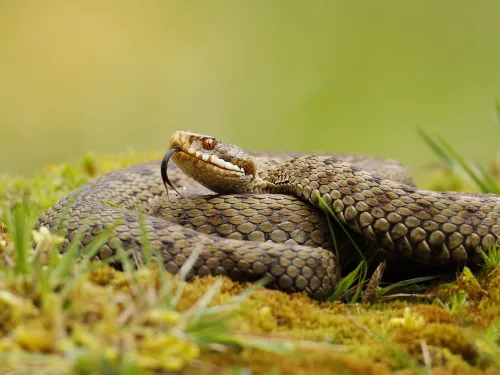
Our only venomous snake, the shy adder can be spotted basking in the sunshine in woodland glades and on heathlands.
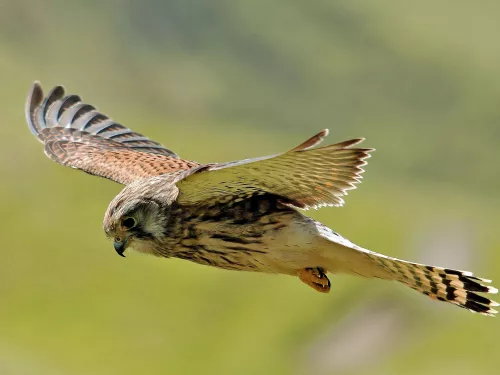
The kestrel is a familiar sight hovering over the side of the road, looking out for its favourite food: small mammals like field voles. It prefers open habitats like grassland, farmland and heathland, but can be seen in towns and villages.
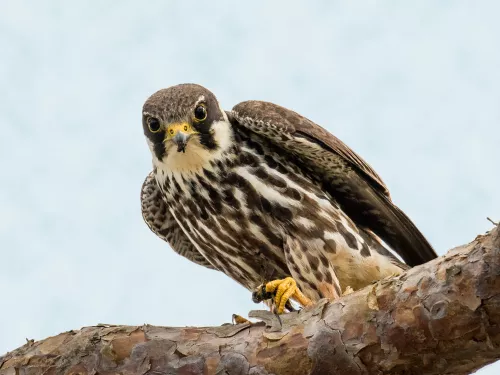
Look out for the swift-like shape of the hobby as it darts over heathlands and wetlands in summer. They are keen hunters, chasing and catching fast-flying dragonflies and small birds on the wing.
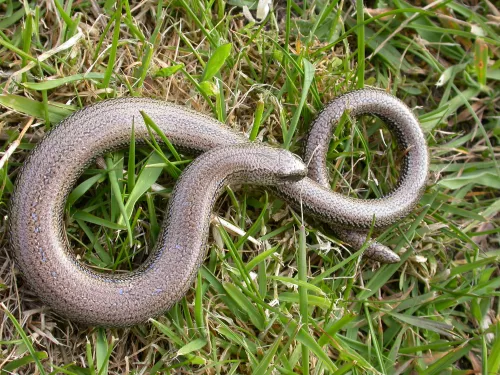
Despite appearances, the slow worm is actually a legless lizard, not a worm or a snake! Look out for it basking in the sun on heathlands and grasslands, or even in the garden, where it favours compost heaps.
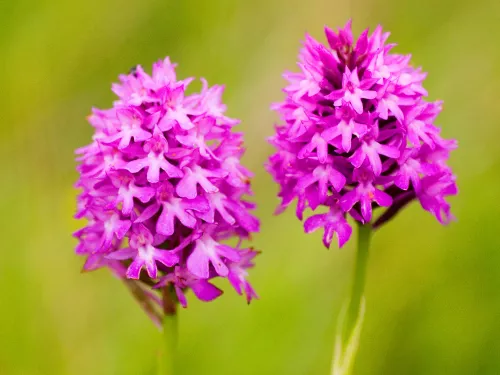
The Pyramidal orchid lives up to its name - look for a bright pinky-purple, densely packed pyramid of flowers atop a green stem. It likes chalk grassland, sand dunes, roadside verges and quarries.
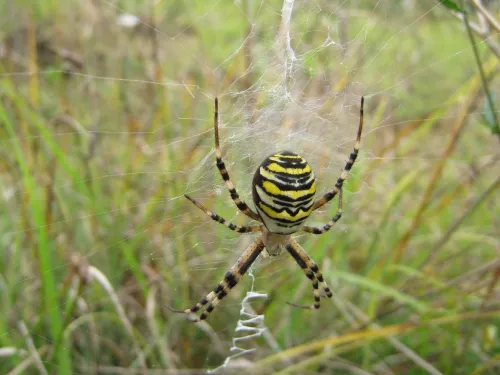
The wasp spider is a great mimic - looking just like a common wasp keeps it safe from predators, even though it is not dangerous itself. It can be found in southern England, but is spreading north.
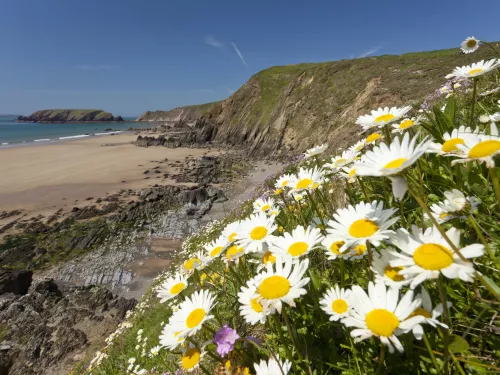
Often growing in swathes along a roadside or field margin, the oxeye daisy is just as at home in traditional hay meadows. The large, white, daisy-like flowers are easy to identify.
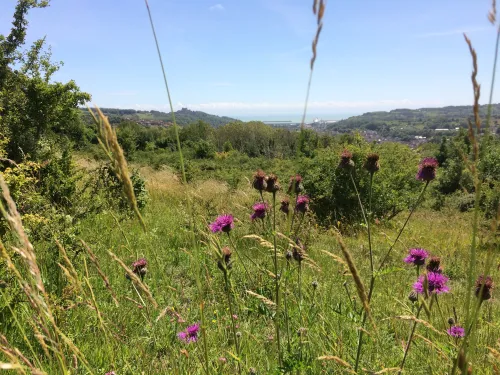
Old Park Hill has a range of habitats but needs to be managed and restored to return it to its early 20th century character, when most of the site would have been open chalk land.
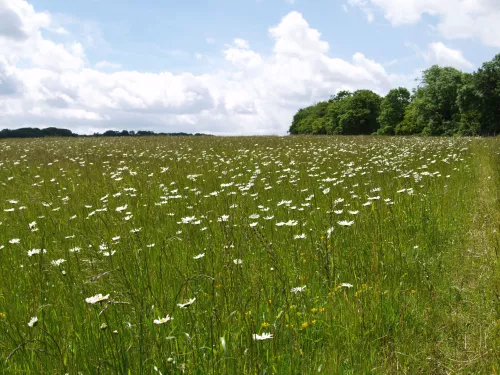
Created from an enormous arable field in 2009, this nature reserve is building an impressive species list as it matures into a vital part of the Medway smile living landscape.
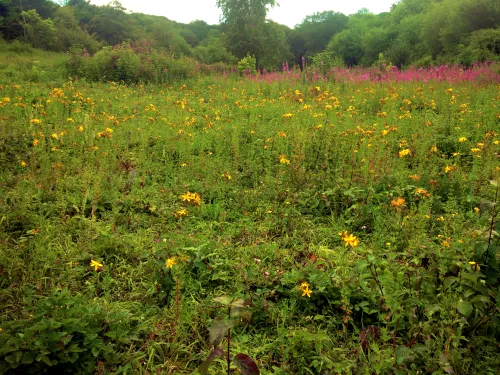
This is a site with something to see in all seasons with a fantastic display of fungi and leaf colour in the autumn, jewel bright wildflowers in the spring and summer and silhouettes of birds of prey gliding across the winter sky.
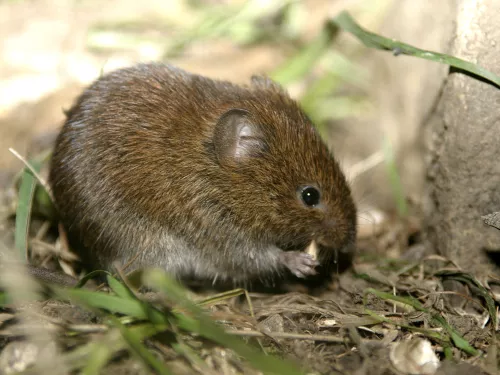
A chalk downland site with a good plant community.
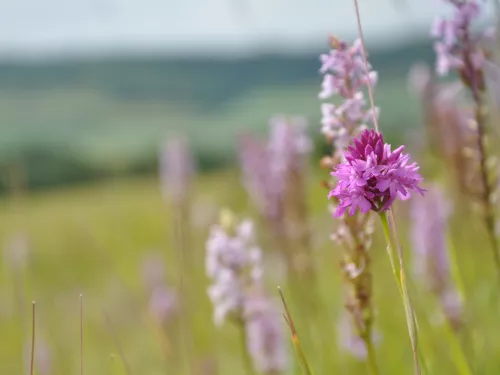
A west and south-west facing slope of the North Downs on the eastern side of the Darent Valley.
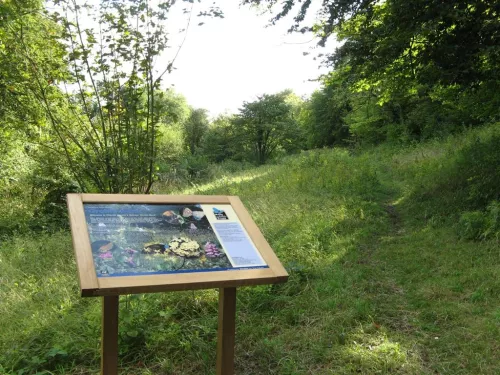
Downe Bank is a uniquely special nature reserve, due to fundamental scientific studies carried out here by Charles Darwin.
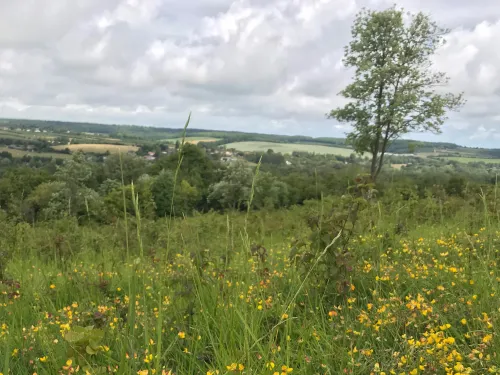
A tucked away area of downland forming a haven for wildlife. The breath-taking views across the Stour valley on the north end and towards Ashford on the south end also are a sight to behold.
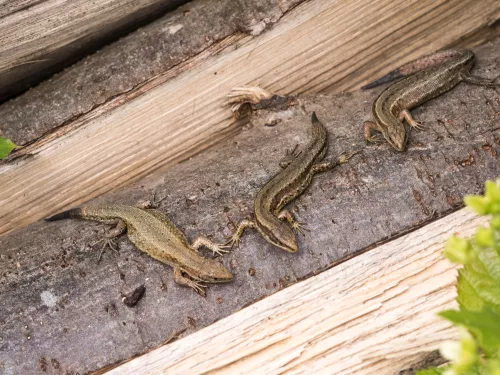
The 'Bank' is almost four hectares of chalk grassland on a southeast-facing hillside with commanding views of the Darent Valley.
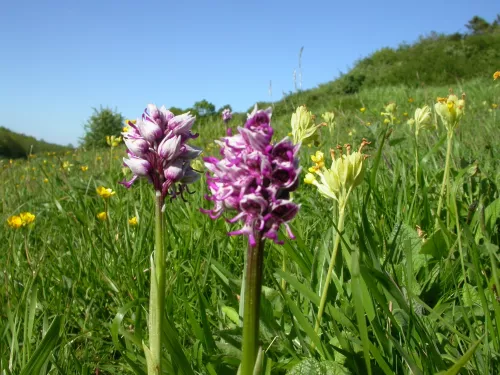
Ancient chalk grassland with a very rich flora.
Sweeping downland slopes packed with wildlife on the outskirts of Dover.
An ancient woodland with some areas of grassland with interesting associated flora.
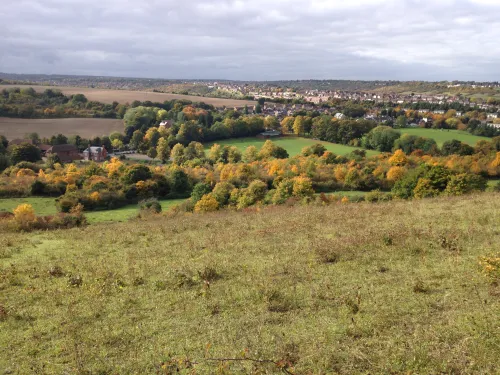
Sweeping panoramic views are not what you expect to find in the heart of the Medway towns but this site has long defied convention. This is our most diverse reserve which is home to the largest population of Man orchids in the country.
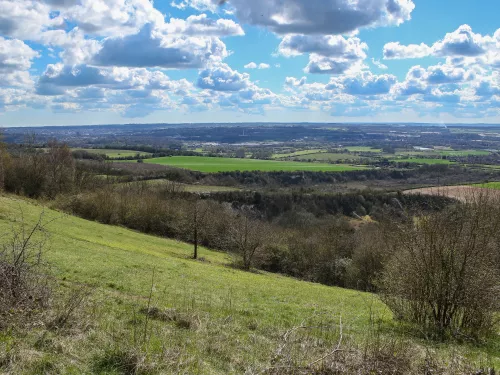
With sublime views over the Weald of Kent, this reserve consists of an area of chalk grassland and a large area of woodland. Some species of orchid can be seen in the woodland and kestrels breed in the chalk cliffs. Various different insects can be observed here.
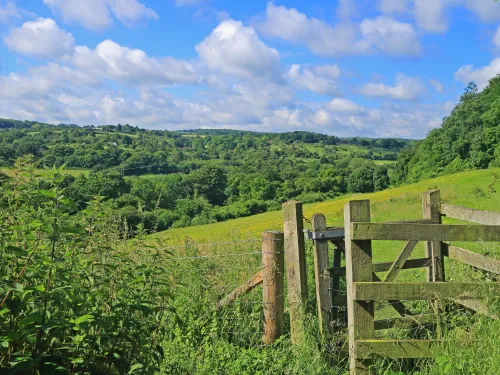
As you leave the car park, you are greeted by Queendown Warren stretching from one side of the valley to the other. The reserve is a 76.5ha site containing a mixture of Chalk Grassland, open Pasture, and Woodland.
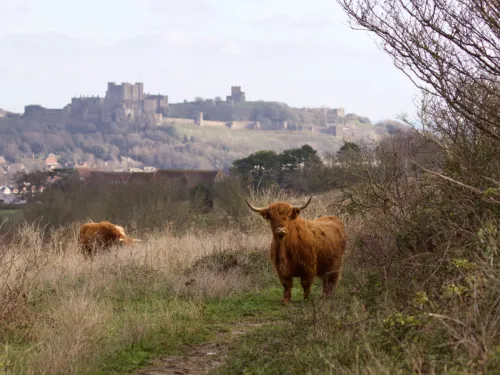
One of Kent Wildlife Trust’s newest Dover reserves, Coombe is undergoing management to restore chalk downland to the reserve, with a future goal to re-introduce frog orchids back to the site.
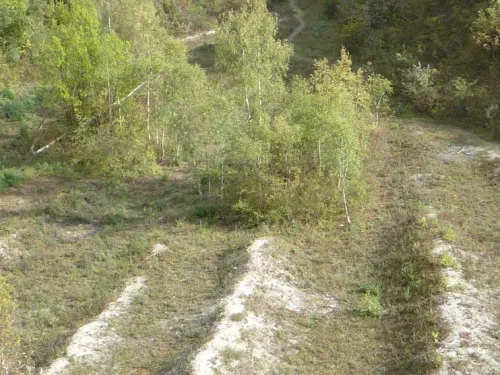
The Culand Pits are a dramatic reminder of the role the cement industry played in shaping the landscape in the Medway Valley. The site is owned by Trenport Investments Ltd who fund the management.
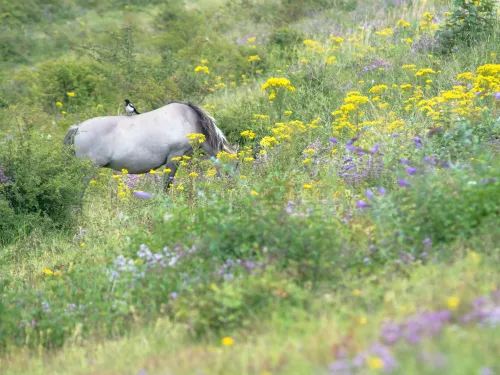
Located next to an industrial estate on the outskirts of Dover, it is hard to believe a nature reserve is there when driving through the estate.
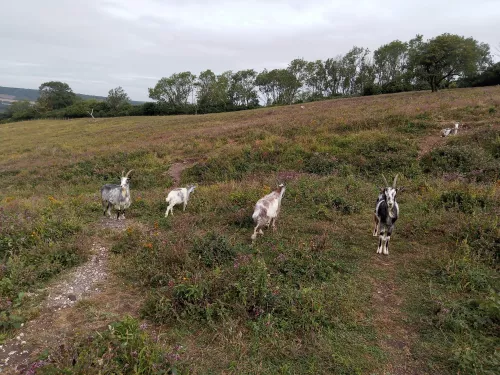
The reserve runs along the scarp slope and consists of a mosaic of habitats from chalk grassland through scrub to woodland. Please note this reserve is not open to the public.
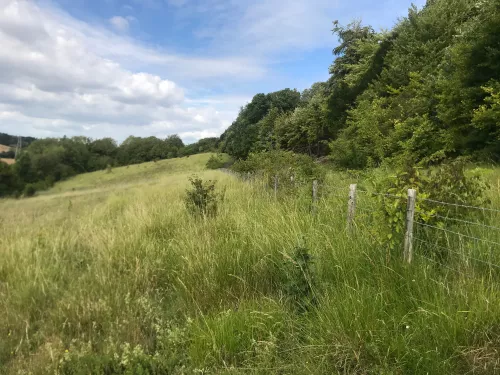
Quilters Wood Reserve is an area of ancient semi natural woodland and chalk grassland situated near Bridge, Canterbury.
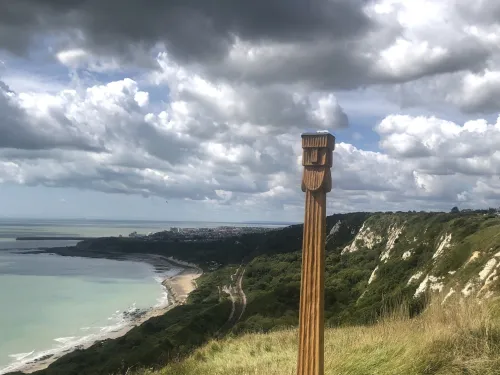
Overlooking the English channel, the Capel-le-Fern reserve has great views of the chalk cliffs that gives the White Cliffs of Dover its name.