

Scarlet tiger moth
This beautiful moth is often found resting on leaves, though it does also fly during the day.

Flower-rich grasslands, once a part of every farm, are part of our culture. Most have developed alongside humans because of livestock grazing and cutting for hay. Many have archaeological and historical features.
Grassland is generally divided into upland, which is above 300m and lowland. This is because the cooler, wetter climate of upland areas favours different species to the warmer, drier and less exposed lowlands. Both types may also be classified as:
Meadows are enclosed grasslands where a hay or silage crop is taken in the summer, while pasture is generally grazed.
UK grasslands store two billion tonnes of carbon in their soils, but this is vulnerable to disturbance. Between 1990-2006, conversion from grassland to arable production (such as ploughing to grow crops) released 14 million tonnes of CO2. Species-rich grasslands are huge carbon stores and when managed carefully they lock in carbon and boost biodiversity.
Grasslands have a huge potential for locking up carbon, not only due to the plants we can see on the surface, but also due to the relationships between the plants, fungi, bacteria and many other species which help enrich the soil with carbon.
Grassland is an ancient habitat. Following the last Ice Age around 12,000 years ago, mossy vegetation and weedy plants colonised bare ground. This was left after the glaciers that covered the UK had melted. Gradually they developed into communities of grasses, sedges and herbs as more plants found a home. As birches and other tree species arrived and spread, these grassland habitats were pushed back to exposed sites on the coast or high in the mountains.
Grasslands also existed in areas where trees were lost over time such as on floodplains or woodland clearings grazed by wild animals. However, it wasn’t until human activities intensified around 6,000 years ago that grassland began to expand. Today around 40% of the UK’s land surface is grassland.
Most of today’s grassland is farmland or rough upland grazing, with only a tiny proportion of ‘unimproved’ grassland remaining. This is grassland that hasn’t been reseeded, fertilised or drained and tends to be full of flowers and wildlife. In England there are around 4.5 million hectares of grassland, of which just 100,000ha are unimproved.
Degradation began as fertilisers started to be used. During the 1940s and 1950s chemical fertilisers, herbicides and new grass varieties were used to increase yields. At the same time government incentives encouraged farmers to plough up grasslands. During the 20th Century, 90% of lowland grasslands were lost.In the uplands, the story was different, but the decline in grassland was just as dramatic. Here, overgrazing led to moorland and blanket bog being converted to less wildlife-rich upland acid grassland and rush pasture.
Unimproved, species-rich grassland is still being lost and grassland on protected sites is deteriorating. The numbers of butterflies and breeding birds, such as curlew and lapwing, continuing to decline. Unimproved grassland supports many rare and beautiful species. This includes orchids, snake’s-head fritillary, waxcap fungi and blue butterflies.
Historically, grasslands have been used in many different ways. The traditions and skills associated with water meadows, shepherding and haymaking are part of our cultural heritage.
We are working to ensure that precious grassland habitats and traditional management techniques are not lost. Careful grazing with traditional breeds and hay-cutting at the right time are some of the ways our fragile grassland habitats are kept in good condition. We are also working closely with farmers and landowners to promote wildlife-friendly practices for managing grassland habitats.
This beautiful moth is often found resting on leaves, though it does also fly during the day.
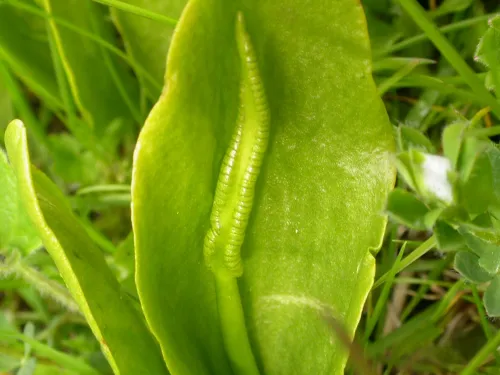
The adder's-tongue fern is so-named because the tall stalk that bears its spores is thought to resemble a snake's tongue. An indicator of ancient meadows, it can be found mainly in southern England.
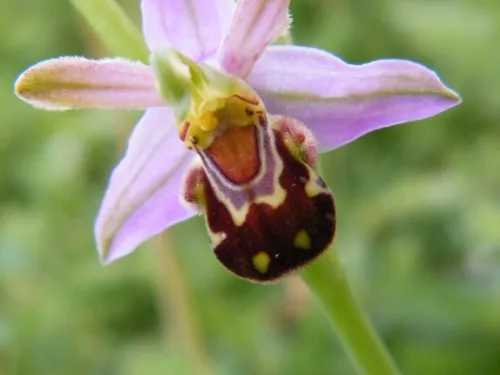
The bee orchid is a sneaky mimic - the flower’s velvety lip looks like a female bee. Males fly in to try to mate with it and end up pollinating the flower. Sadly, the right bee species doesn’t live here, so this orchid is self-pollinated in the UK.
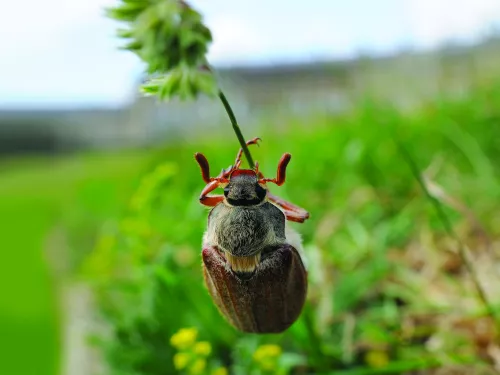
This large, brown beetle can be seen swarming around streetlights in spring. They live underground as larvae for years and emerge as adults often in large numbers. Listen for their characteristic buzzing sound.
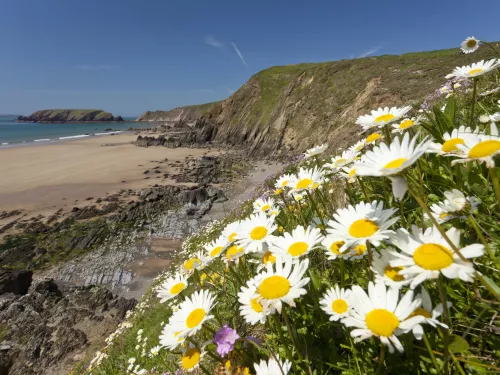
Often growing in swathes along a roadside or field margin, the oxeye daisy is just as at home in traditional hay meadows. The large, white, daisy-like flowers are easy to identify.
This is probably the most widespread and commonest of the marsh orchids.
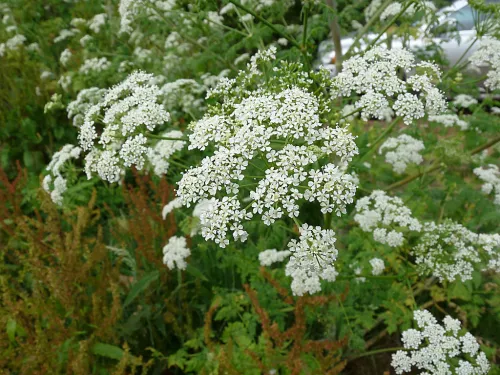
A notoriously poisonous plant, hemlock produces umbrella-like clusters of white flowers in summer. It can be found in damp places, such as ditches, riverbanks and waste ground.
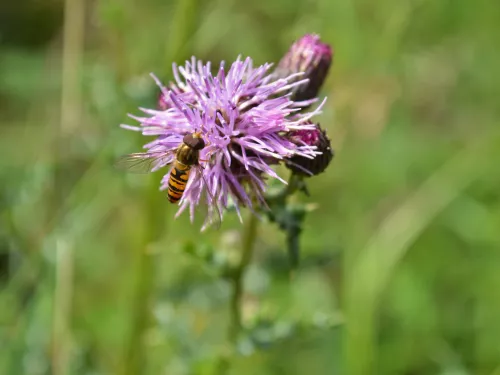
Our most common hoverfly, the marmalade fly is orange with black bands across its body. It feeds on flowers like tansy, ragwort and cow parsley in gardens, hedgerows, parks and woodlands.
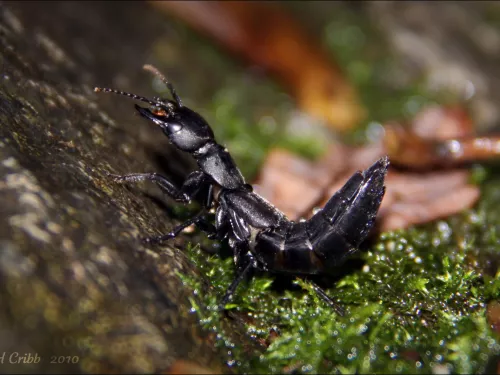
A ferocious and fast predator, the Devil's coach horse beetle hunts invertebrates after dark in gardens and on grasslands. It is well-known for curling up its abdomen like the tail of a scorpion when defending itself.
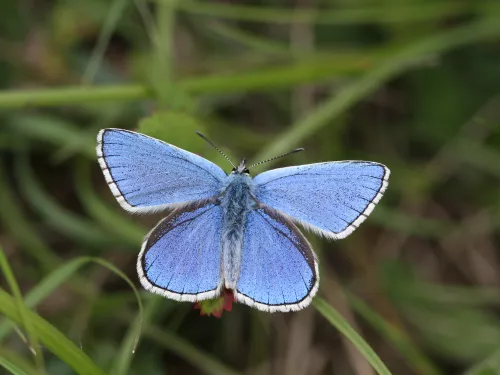
The rare Adonis blue can be spotted on sunny chalk grasslands throughout summer. Males are a dazzling sky-blue in colour, while females are duller brown.
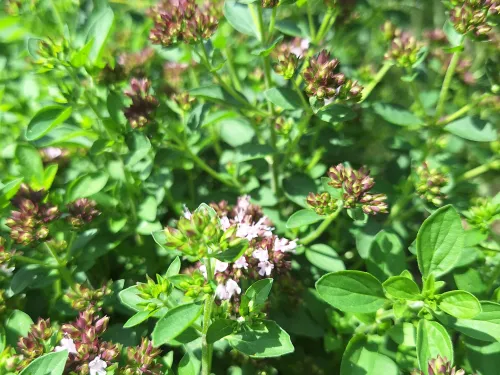
Wild marjoram is actually the same aromatic herb as oregano which is used in Mediterranean cooking. Its small, pink flower clusters can be seen on chalk and limestone grasslands in summer.
The bee orchid is a sneaky mimic - the flower’s velvety lip looks like a female bee. Males fly in to try to mate with it and end up pollinating the flower. Sadly, the right bee species doesn’t live here, so this orchid is self-pollinated in the UK.
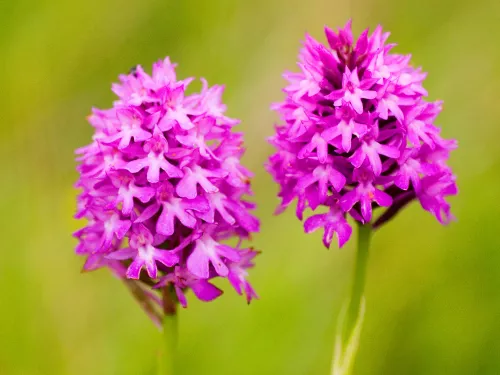
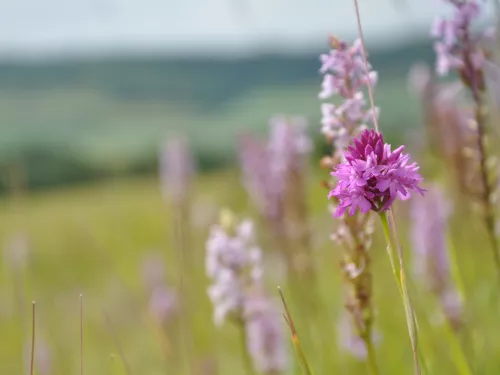
The Pyramidal orchid lives up to its name - look for a bright pinky-purple, densely packed pyramid of flowers atop a green stem. It likes chalk grassland, sand dunes, roadside verges and quarries.
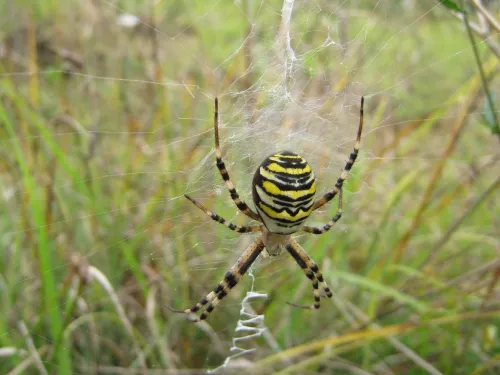
The wasp spider is a great mimic - looking just like a common wasp keeps it safe from predators, even though it is not dangerous itself. It can be found in southern England, but is spreading north.
Often growing in swathes along a roadside or field margin, the oxeye daisy is just as at home in traditional hay meadows. The large, white, daisy-like flowers are easy to identify.
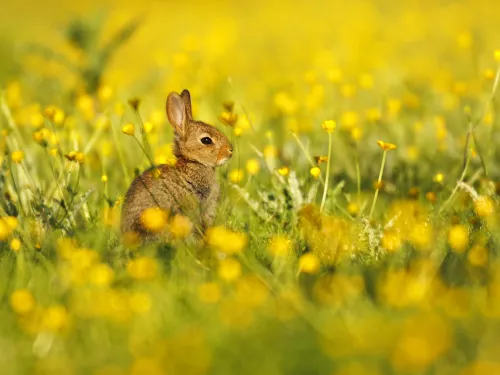
Who doesn’t love spotting rabbits hopping through long grass during a walk in the countryside? They are a common sight but it is always a treat to see their curious faces popping up, ears stood tall on the look out for predators.
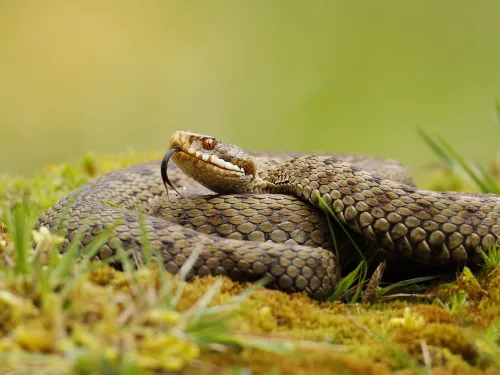
Our only venomous snake, the shy adder can be spotted basking in the sunshine in woodland glades and on heathlands.
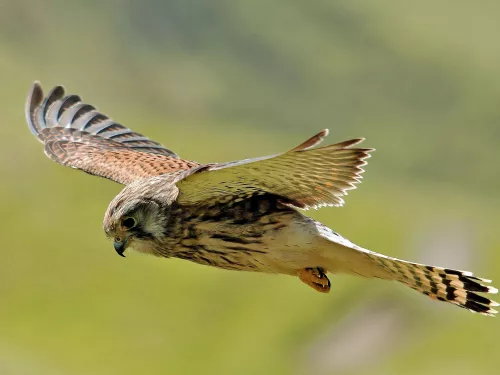
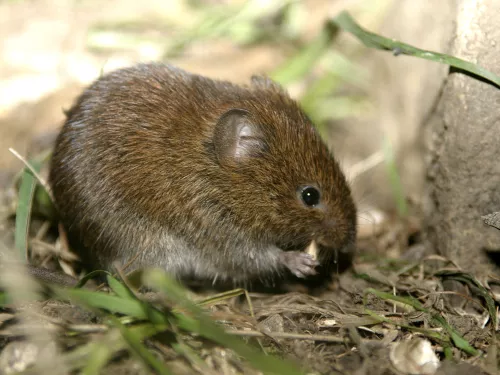
The kestrel is a familiar sight hovering over the side of the road, looking out for its favourite food: small mammals like field voles. It prefers open habitats like grassland, farmland and heathland, but can be seen in towns and villages.
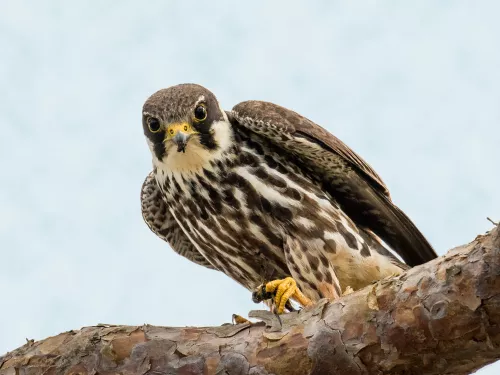
Look out for the swift-like shape of the hobby as it darts over heathlands and wetlands in summer. They are keen hunters, chasing and catching fast-flying dragonflies and small birds on the wing.
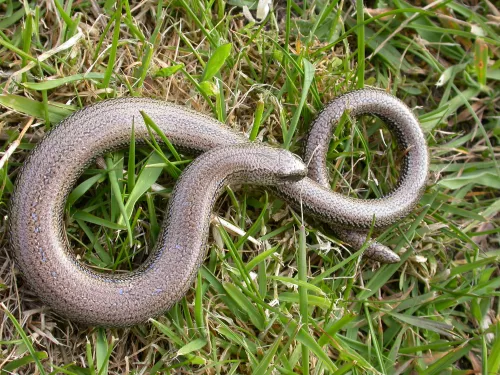
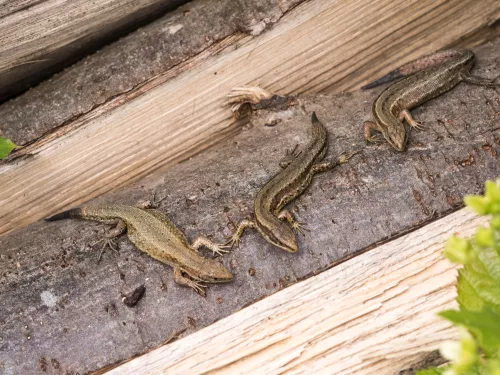
Despite appearances, the slow worm is actually a legless lizard, not a worm or a snake! Look out for it basking in the sun on heathlands and grasslands, or even in the garden, where it favours compost heaps.
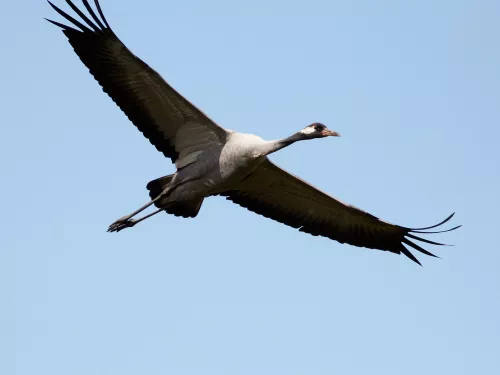
As the UK’s tallest bird the common crane is instantly recognisable with the ruffle of tail feathers and very long legs. Their bugling call is also very distinctive.
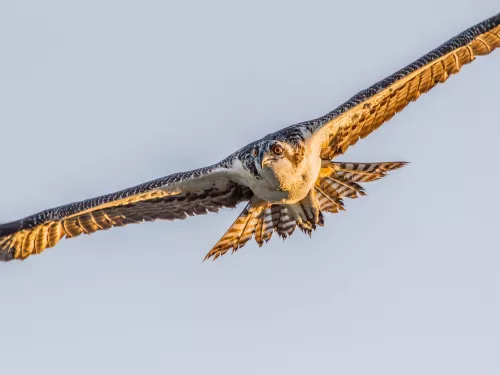
A great way to get up close and personal with the magnificent osprey is via one of the many nestcams set-up in the places that it breeds: Scotland, Cumbria, Wales and the East Midlands.
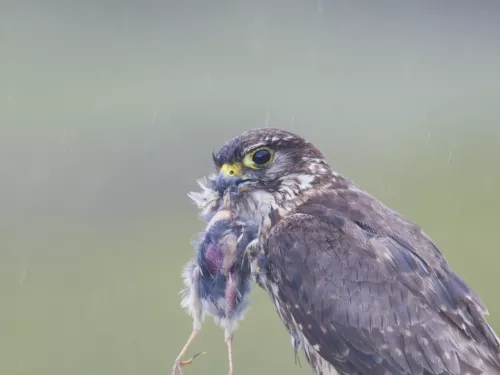
Our most diminutive falcon, the merlin is a pretty bird of prey. It chases small birds, flying low to the ground or hovering in the breeze because of its small size. Resident merlins are joined in winter by Icelandic migrants.
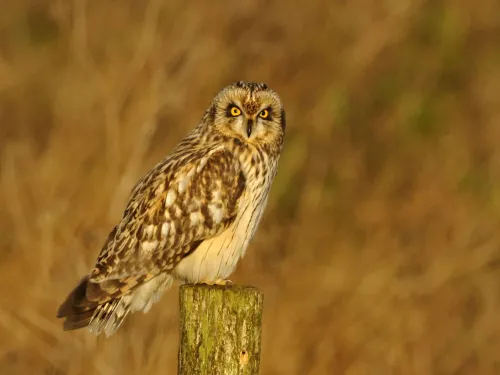
The short-eared owl, or 'Shortie', is an unusual owl because it prefers to be out and about in the daytime. Learn more about it in our species information page.
This large, brown beetle can be seen swarming around streetlights in spring. They live underground as larvae for years and emerge as adults often in large numbers. Listen for their characteristic buzzing sound.
The Pyramidal orchid lives up to its name - look for a bright pinky-purple, densely packed pyramid of flowers atop a green stem. It likes chalk grassland, sand dunes, roadside verges and quarries.
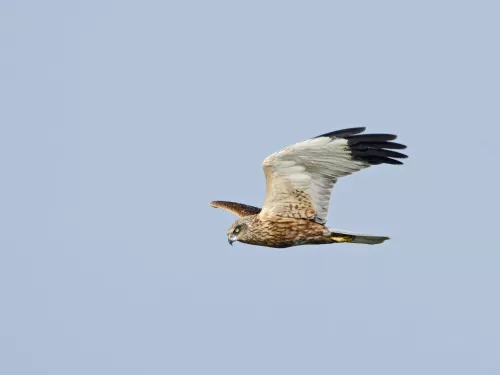
The courtship of the marsh harrier is certainly a sight to behold - wheeling and tumbling through the sky, male and female partners lock talons in mid-air. Look out for this rare bird over reedbeds in East Anglia, Somerset and the South East.
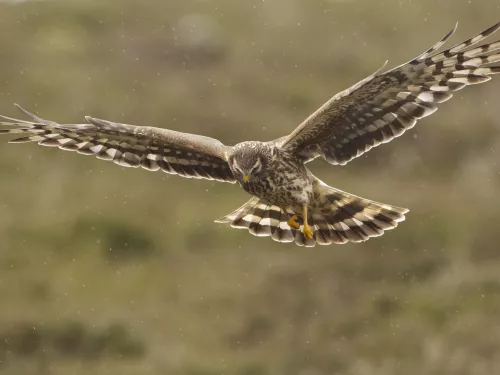
The hen harrier has been severely persecuted for taking game species and has suffered massive declines in numbers as a result. Thankfully, conservation projects are underway to reduce conflict surrounding its controversial prey.
The short-eared owl, or 'Shortie', is an unusual owl because it prefers to be out and about in the daytime. Learn more about it in our species information page.
Who doesn’t love spotting rabbits hopping through long grass during a walk in the countryside? They are a common sight but it is always a treat to see their curious faces popping up, ears stood tall on the look out for predators.
The kestrel is a familiar sight hovering over the side of the road, looking out for its favourite food: small mammals like field voles. It prefers open habitats like grassland, farmland and heathland, but can be seen in towns and villages.
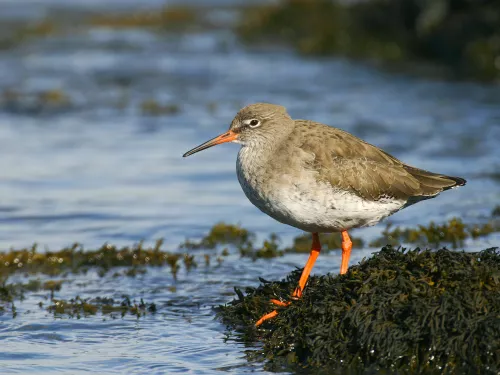
The redshank lives up to its name as it sports distinctive long, bright red legs! It feeds and breeds on marshes, mudflats, mires and saltmarshes. Look out for it posing on a fence post or rock.
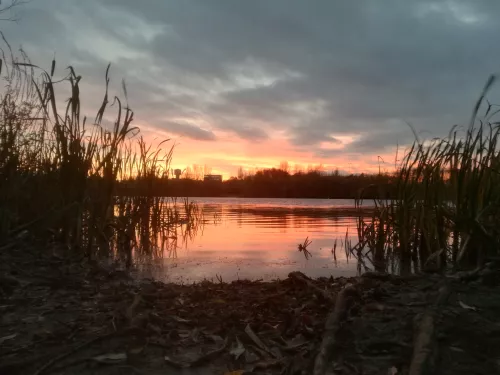
Conningbrook Lakes is made up of a series of lakes, ponds, river, wet woodland and grasslands – creating a great place for a riverside stroll, and host to a variety of wildlife.
An ancient woodland site.
This remote and tranquil reserve comprises woodland, nesting within an area of pasture and orchard.
A meadow and low-lying bog.
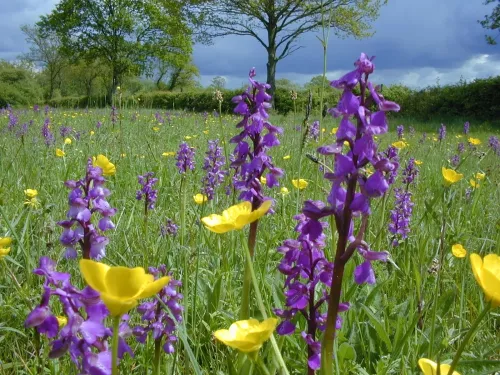
An excellent example of an unimproved hay meadow. Designated as Kent's Coronation Meadow.
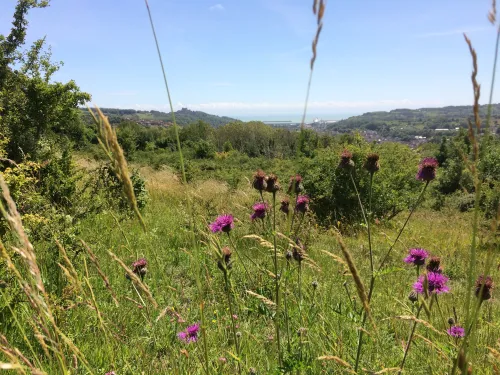
Old Park Hill has a range of habitats but needs to be managed and restored to return it to its early 20th century character, when most of the site would have been open chalk land.
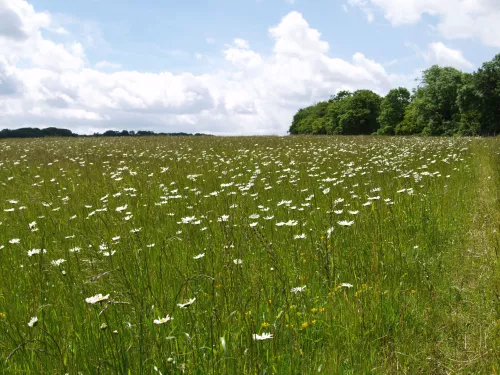
Created from an enormous arable field in 2009, this nature reserve is building an impressive species list as it matures into a vital part of the Medway smile living landscape.
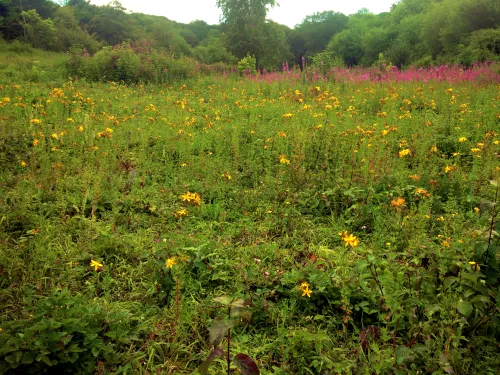
This is a site with something to see in all seasons with a fantastic display of fungi and leaf colour in the autumn, jewel bright wildflowers in the spring and summer and silhouettes of birds of prey gliding across the winter sky.
A chalk downland site with a good plant community.
A west and south-west facing slope of the North Downs on the eastern side of the Darent Valley.
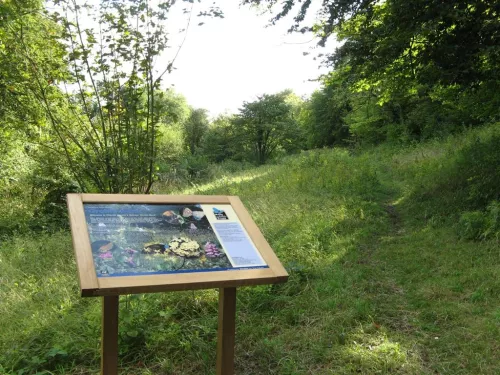
Downe Bank is a uniquely special nature reserve, due to fundamental scientific studies carried out here by Charles Darwin.
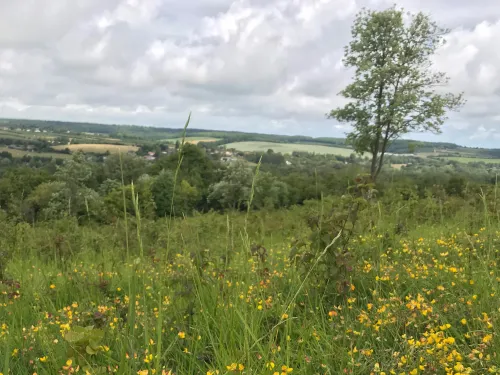
A tucked away area of downland forming a haven for wildlife. The breath-taking views across the Stour valley on the north end and towards Ashford on the south end also are a sight to behold.
The 'Bank' is almost four hectares of chalk grassland on a southeast-facing hillside with commanding views of the Darent Valley.
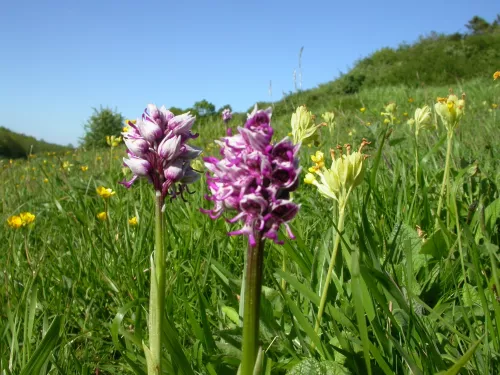
Ancient chalk grassland with a very rich flora.
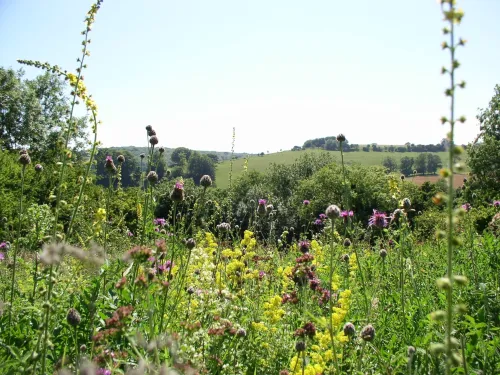
Sweeping downland slopes packed with wildlife on the outskirts of Dover.
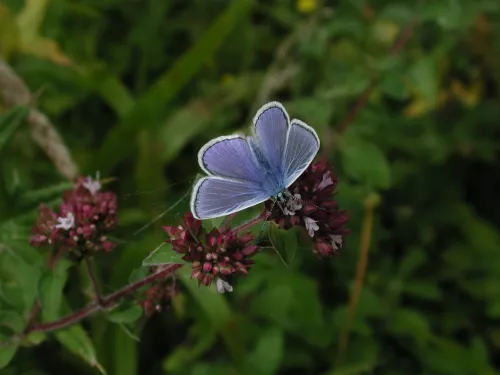
An ancient woodland with some areas of grassland with interesting associated flora.
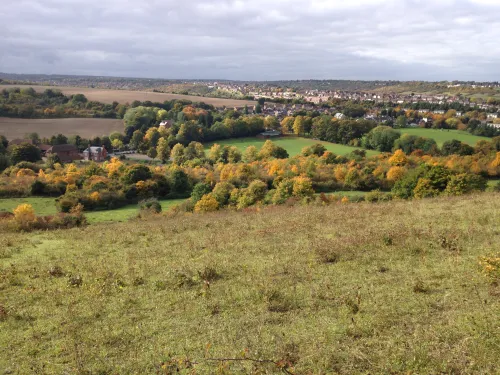
Sweeping panoramic views are not what you expect to find in the heart of the Medway towns but this site has long defied convention. This is our most diverse reserve which is home to the largest population of Man orchids in the country.
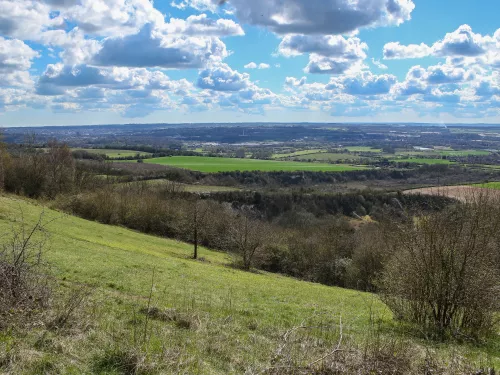
With sublime views over the Weald of Kent, this reserve consists of an area of chalk grassland and a large area of woodland. Some species of orchid can be seen in the woodland and kestrels breed in the chalk cliffs. Various different insects can be observed here.
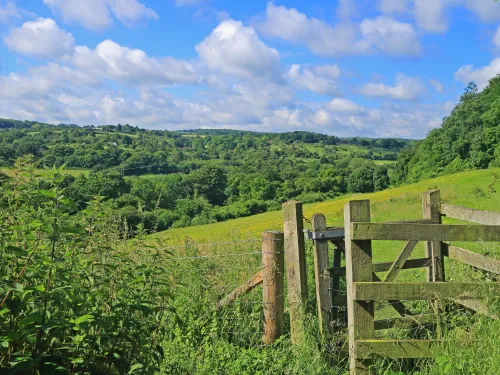
As you leave the car park, you are greeted by Queendown Warren stretching from one side of the valley to the other. The reserve is a 76.5ha site containing a mixture of Chalk Grassland, open Pasture, and Woodland.
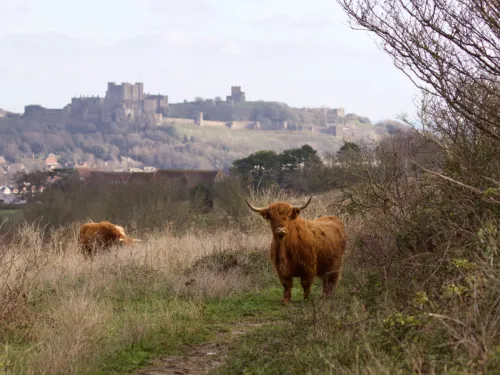
One of Kent Wildlife Trust’s newest Dover reserves, Coombe is undergoing management to restore chalk downland to the reserve, with a future goal to re-introduce frog orchids back to the site.
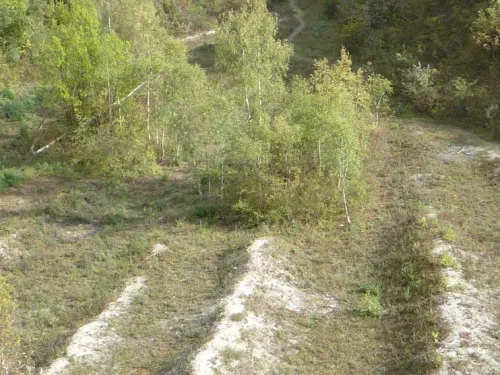
The Culand Pits are a dramatic reminder of the role the cement industry played in shaping the landscape in the Medway Valley. The site is owned by Trenport Investments Ltd who fund the management.
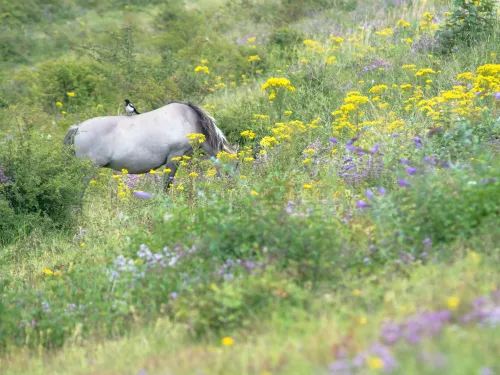
Located next to an industrial estate on the outskirts of Dover, it is hard to believe a nature reserve is there when driving through the estate.
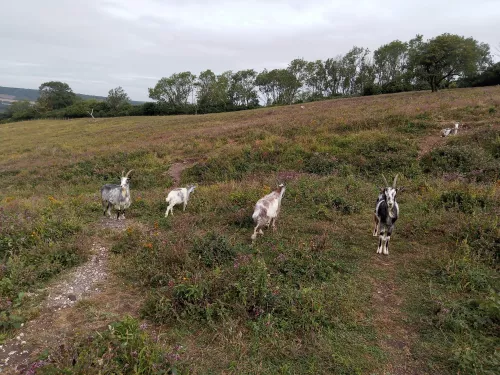
The reserve runs along the scarp slope and consists of a mosaic of habitats from chalk grassland through scrub to woodland. Please note this reserve is not open to the public.
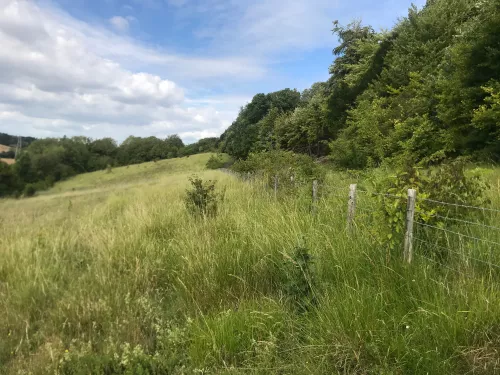
Quilters Wood Reserve is an area of ancient semi natural woodland and chalk grassland situated near Bridge, Canterbury.
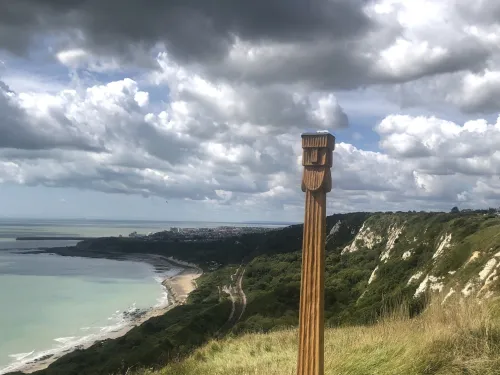
Overlooking the English channel, the Capel-le-Fern reserve has great views of the chalk cliffs that gives the White Cliffs of Dover its name.
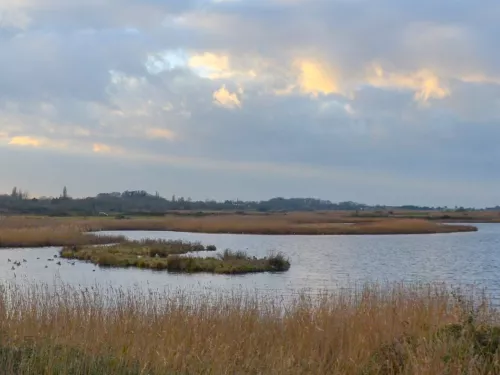
Oare Marshes is an international importance for migratory, overwintering and breeding wetland birds, the reserve consists of grazing marsh (one of a few left in Kent).
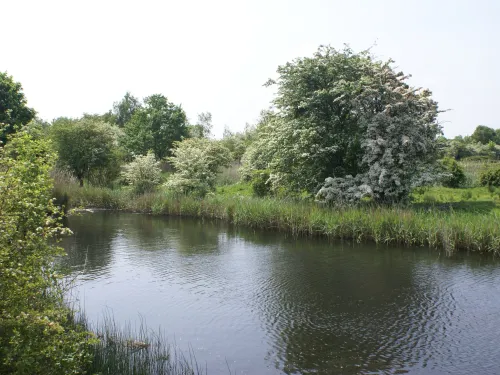
Lying along the edge of the river Medway, this patchwork of wet fields and scrub is criss-crossed by ditches and home to many rare and unusual plants and animals.
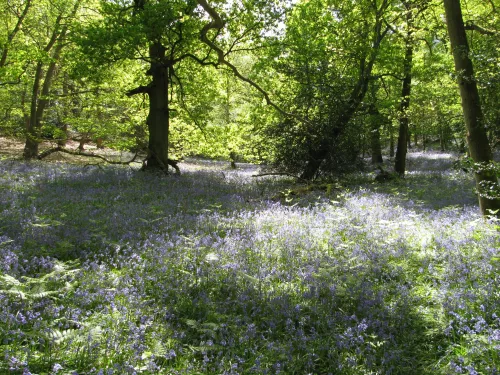
'Relic' wood pasture, veteran trees and nationally rare acid grassland make up this site squeezed between major roads, railway lines, and the rapid urban development of Ashford.
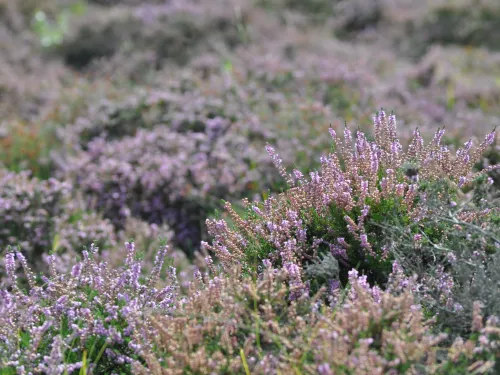
Rich in flora and fauna, this important reserve contains Kent's last four valley bogs and one of its few remaining fragments of open heath.
Rich in flora and fauna, this important reserve contains Kent's last four valley bogs and one of its few remaining fragments of open heath.
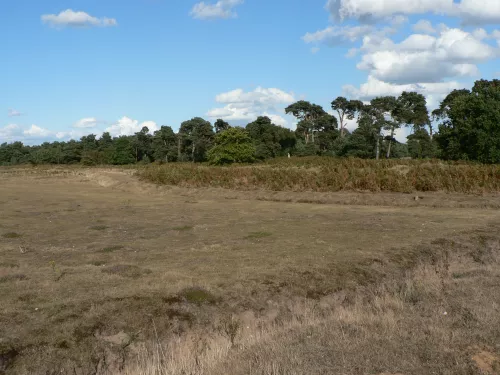
Sprinkled with diminutive, short-living flowers in spring and parched dry by July, this is a habitat of heathlands, coastal grasslands and ancient parkland.
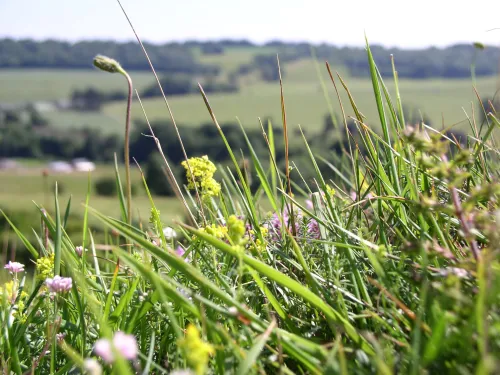
Typical of softly rolling pastoral landscapes, the short, aromatic turf of lowland calcareous grassland is flower-rich and humming with insects in the summer. Its long use by humans lends it an ancient feel and it is often seen amongst prehistoric burial…
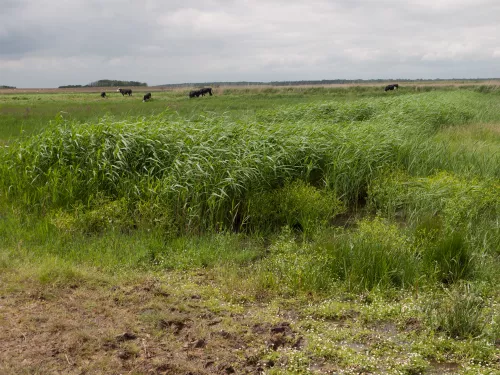
Enormous flocks of geese, ducks and swans swirl down from wide skies to drop onto the flat, open expanses of flooded grazing marshes in winter. In spring, lapwing tumble overhead and the soft, damp ground speckled with cuckooflowers provides excellent…
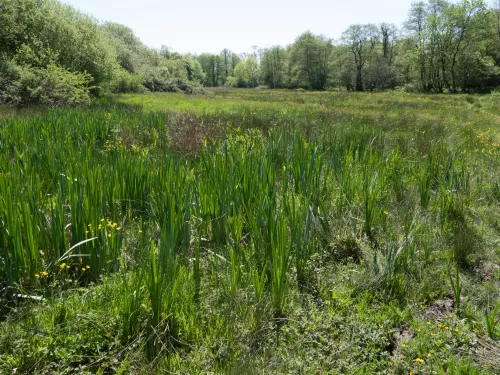
This distinctive type of damp pasture is generally found on commons, as a component of lowland fen, or in undeveloped corners of otherwise intensively farmed landscapes.
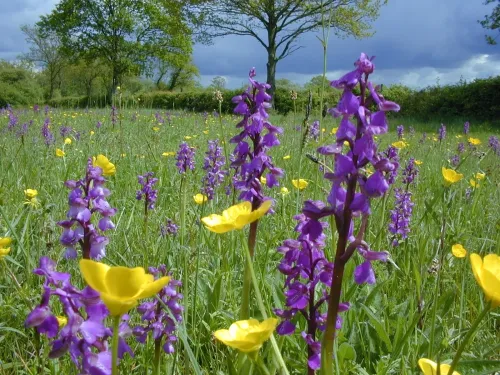
Generally found as part of lowland farms or nature reserves, these small, flower-rich fields are at their best in midsummer when the plethora of flowers and insects is a delight. Tiny reminders of the former abundance of wildflowers in the farmed…
A summer meadow is a beautiful sight, but there’s so much more to it than gently waving grass heads and fabulous flowers.
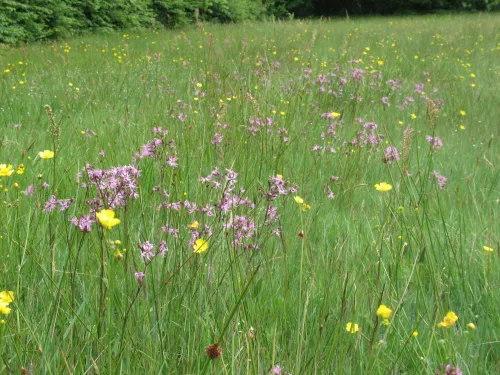
Kent Wildlife Trust has begun an exciting new project to bring back our traditional hay meadows, which have declined nationally by 97% since the 1940s.