
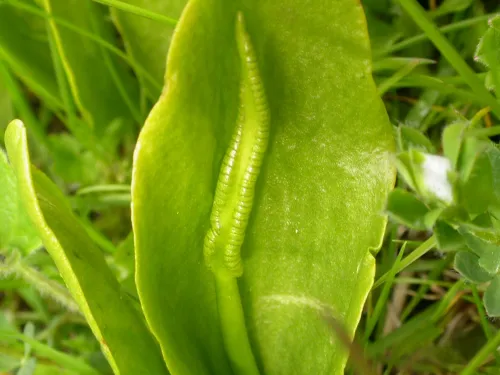
Adder's-tongue fern
The adder's-tongue fern is so-named because the tall stalk that bears its spores is thought to resemble a snake's tongue. An indicator of ancient meadows, it can be found mainly in southern England.

Generally found as part of lowland farms or nature reserves, these small, flower-rich fields are at their best in midsummer when the plethora of flowers and insects is a delight. Tiny reminders of the former abundance of wildflowers in the farmed countryside, they are now treasured for both their wildlife and for the unique rural traditions that developed as part of their farmed history.
Today it is rare to come across a species-rich floodplain meadow without actively seeking it out – there are only around 200 left in the UK, encompassing about 3000 ha. However, clusters of sites can still be found in the flat valleys of lowland rivers, including the iconic Lammas Lands of the upper Thames, the River Ouse in Huntingdonshire and on the River Derwent in Yorkshire. Here the moist, deep soils that are neither particularly acid nor lime-rich support flower-rich swards with cuckoo flower, meadow buttercup, common sorrel, meadow vetchling and oxeye daisy, followed later in the summer by taller species such as meadowsweet and great burnet. Wetter, less fertile sites support marsh marigold and more sedges.
Drier meadows and pastures are not quite so scarce and can still be found in corners of farms that have escaped ‘improvement’, and in nature reserves, churchyards and on road and railway embankments. Sweet vernal-grass (which gives hay much of its characteristic scent) and crested dog’s-tail are typical grasses, but it is the herbs, including species such as cowslip, red clover, knapweed, oxeye daisy and lady’s bedstraw that together make up the bulk of the sward.
Flower-rich meadows and pastures owe their wealth of species to traditional systems of hay-cutting and grazing that have persisted for centuries. Pastures are generally grazed throughout the summer; meadows are shut up in the spring to allow the sward to grow up, so a hay cut can be taken, and then the livestock are brought back to graze the re-growth in late summer. In meadows, the annual removal of vegetation keeps bulky species in check and allows more delicate species to flourish. In pastures, grazing can play a similar role to cutting, but flowering heads are fewer as many are grazed off. Fertile river silt left by floods gently fertilises the sward of floodplain meadows, while on drier sites farmyard manure may be used. Both sources of nutrients help balance the nutrients removed by hay and growing livestock, ensuring the continuity of a diverse sward.
Sparsely scattered across the lowlands.
Meadows and pastures are known for the sheer abundance of flowers present rather than for the presence of rarities (although it is worth keeping an eye out species such as green-winged orchid, dyer’s greenweed and adder’s tongue fern). Hay meadows are best in June and July before they are cut and when the abundant nectar and pollen supports large numbers of invertebrates, including bumblebees and butterflies. However, to see the fine display of snake’s-head fritillaries found on some floodplain meadows, April is the best time to visit. Larger wet meadows can support breeding waders; elsewhere, look out for farmland generalists such as meadow pipit and skylark.
Some floodplain meadows were managed as water meadows. These were deliberately flooded in the spring to encourage an early flush of growth, and old sluices and channels can sometimes be seen. A small number of water meadows have been restored and are once again flooded or ‘drowned’ in spring each year. Some meadows still contain dole stones that mark out lots, allocated according to varying customs, to people who held common rights to take a hay cut in the summer.
Pastures tend to be less showy than meadows but maintain their interest later into the year (if lightly grazed). Features of interest found in pasture that are absent in meadows include anthills (each created by thousands of yellow meadow ants) and ‘ridge and furrow’, often a relic of medieval cultivation.
Flower-rich lowland meadows and pastures were once a feature of every farm, but only a tiny fraction remain today. Much of the loss has been recent (97% since 1935) and is attributed to changes in farming, including the use of artificial fertilisers, changes in cutting regimes (with a move from summer hay to earlier silage cutting) and drainage, as well as gravel extraction and abandonment. Conservationists were perhaps slow off the mark to recognise the value of the habitat and its plight, and even now only about half receive legal protection. Much is privately owned, and conservation efforts currently centre around restoration and recreation projects and the provision of advice and information to landowners.
The adder's-tongue fern is so-named because the tall stalk that bears its spores is thought to resemble a snake's tongue. An indicator of ancient meadows, it can be found mainly in southern England.
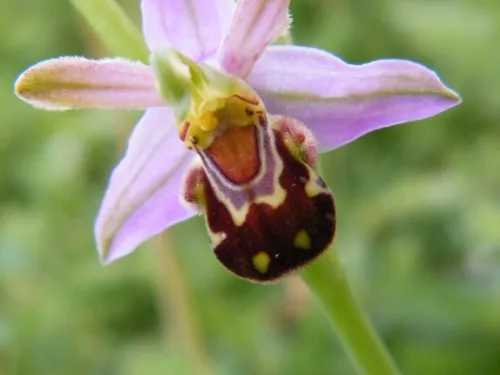
The bee orchid is a sneaky mimic - the flower’s velvety lip looks like a female bee. Males fly in to try to mate with it and end up pollinating the flower. Sadly, the right bee species doesn’t live here, so this orchid is self-pollinated in the UK.

This beautiful moth is often found resting on leaves, though it does also fly during the day.
This is probably the most widespread and commonest of the marsh orchids.
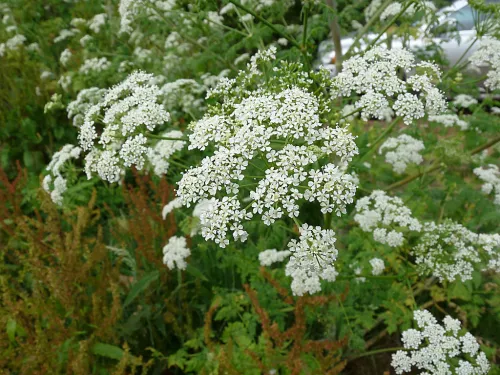
A notoriously poisonous plant, hemlock produces umbrella-like clusters of white flowers in summer. It can be found in damp places, such as ditches, riverbanks and waste ground.
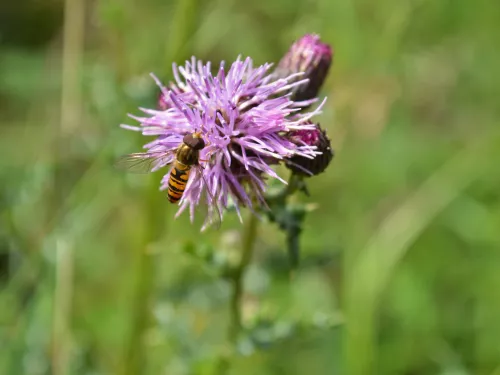
Our most common hoverfly, the marmalade fly is orange with black bands across its body. It feeds on flowers like tansy, ragwort and cow parsley in gardens, hedgerows, parks and woodlands.
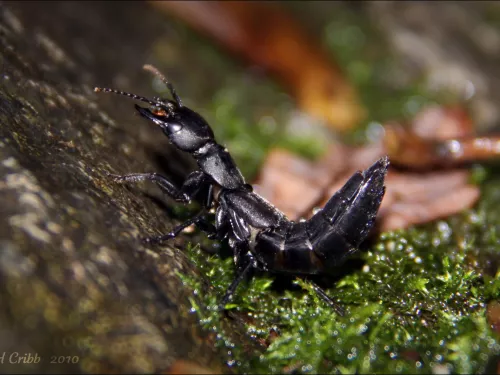
A ferocious and fast predator, the Devil's coach horse beetle hunts invertebrates after dark in gardens and on grasslands. It is well-known for curling up its abdomen like the tail of a scorpion when defending itself.
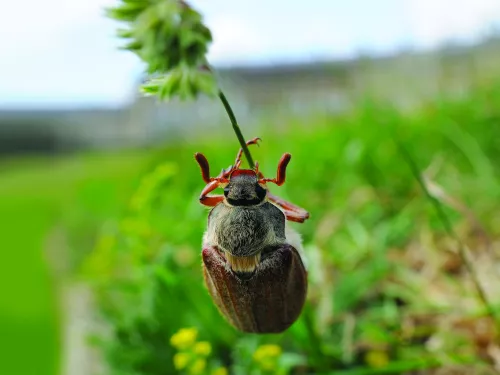
This large, brown beetle can be seen swarming around streetlights in spring. They live underground as larvae for years and emerge as adults often in large numbers. Listen for their characteristic buzzing sound.
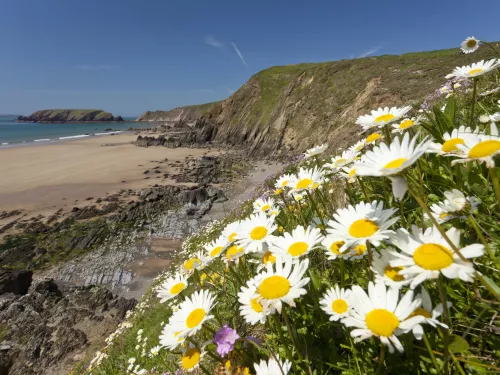
Often growing in swathes along a roadside or field margin, the oxeye daisy is just as at home in traditional hay meadows. The large, white, daisy-like flowers are easy to identify.
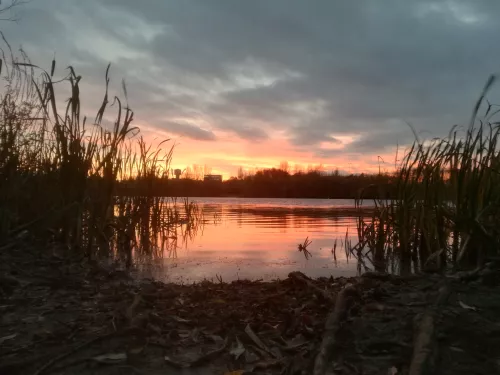
Conningbrook Lakes is made up of a series of lakes, ponds, river, wet woodland and grasslands – creating a great place for a riverside stroll, and host to a variety of wildlife.
An ancient woodland site.
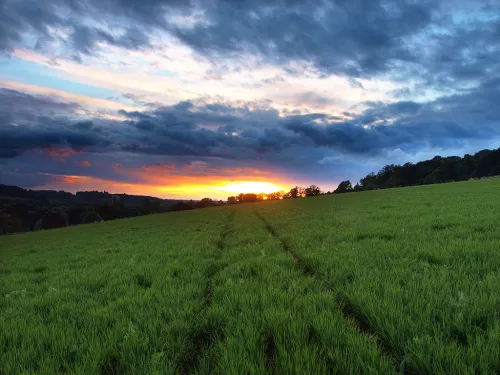
This remote and tranquil reserve comprises woodland, nesting within an area of pasture and orchard.
A meadow and low-lying bog.
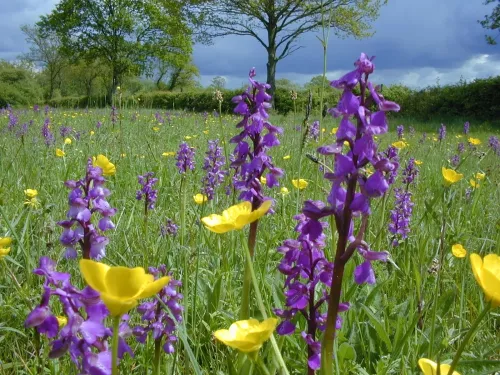
An excellent example of an unimproved hay meadow. Designated as Kent's Coronation Meadow.